
Menu
Accredited Hydrogen Advisor
Therapeutic Hydration Partner
Certified by the Molecular Hydrogen Institute - Cedar City, UT, USA
There's never been a more exciting time to explore the science of therapeutic hydration. I'm here to share the evidence, look beyond the marketing, and help you discover what makes molecular hydrogen so remarkable.
Orlena Steele-Prior
Begin here...
A simple framework to help you understand what makes water therapeutic.


"The most important question isn't whether water is clean. It's whether it can be therapeutic."
We've spent decades talking about filtration, minerals, pH and alkalinity.
Now it's time to explore a completely different question: what makes water therapeutic?
The answer begins with molecular hydrogen, a naturally occurring molecule that has demonstrated therapeutic benefits across every organ and biological system in the body.
The Therapeutic Hydration Framework™
A simple framework to help you understand what makes water therapeutic.


1

1.Why water matters
Every second of every day, water is quietly working to keep you alive.
Every heartbeat. Every breath. Every cell.
Water is fundamental to life. Around 60 to 70% of the adult human body is made up of water, and every organ and biological system depends on it to function.
Water is essential for:
Every cell to maintain its structure and function.
Delivering oxygen and nutrients throughout the body.
Supporting energy production and normal metabolism.
Regulating body temperature.
Transporting waste products for elimination.
Supporting healthy circulation, cognition and overall physiological function.
Water underpins every aspect of human health.

"The body depends on water. The next question is whether all water supports the body in the same way."
2. Not all water is the same
We've been evaluating water through a very narrow lens.
For decades, the conversation has centred on filtration, taste, purity and, more recently, pH. While these characteristics have shaped how we choose water, they don't tell us everything worth knowing about it.

Filtered Water
How it's produced:
Passed through filtration media such as activated carbon, ceramic or other filter technologies to reduce selected contaminants.
Key characteristic:
May reduce chlorine, sediment, odours and other impurities depending on the filtration method.

Reverse Osmosis
How it's produced:
Forced through a semi-permeable membrane under pressure, removing many dissolved solids, contaminants and microorganisms.
Key characteristics:
Very low total dissolved solids (TDS) and mineral content.

Bottled Water
How it's produced:
Packaged at the source or after purification in single-use plastic or glass bottles.
Key characteristics:
While some bottled water is sourced from protected underground aquifers or natural springs, much of it originates from filtered municipal tap water.
.png)
Alkaline Water
How it's produced:
Occurs naturally in some springs or is produced by increasing water's pH through mineral addition or electrolysis.
Key characteristics:
Has a pH above neutral (greater than 7). On a pH indicator, alkaline water typically appears blue to blue-green.

Spring Water
How it's produced:
Collected from a protected underground spring or aquifer where water naturally flows to the surface.
Key characteristics:
Retains its naturally occurring minerals and trace elements, with composition reflecting the geology of its underground source.
.png)
Hydrogen rich water
How it's produced:
Produced by dissolving molecular hydrogen (H₂) into water using Proton Exchange Membrane (PEM) technology or electrolysis (electrolysed reduced water, ERW).
Key characteristics
Contains dissolved molecular hydrogen (H₂), a biologically active gas.

3. What makes water therapeutic?
The answer lies in the smallest molecule in the universe - hydrogen.
When water carries dissolved molecular hydrogen (H₂), it becomes something far more than hydration. It becomes the foundation of one of the most exciting health breakthroughs of our time.
Hydrogen was the first element to form after the Big Bang approximately 13.8 billion years ago. It is the simplest, lightest and most abundant element in the universe.
When two hydrogen atoms bond together, they form molecular hydrogen (H₂), a colourless, odourless and tasteless gas. It is this form of hydrogen that has become the focus of scientific research across medicine, sport and optimal health.
Perhaps most surprising is that molecular hydrogen isn't foreign to the human body. Every time we eat dietary fibre, our gut bacteria naturally produce it as part of normal digestion.
So if molecular hydrogen has always existed, and our bodies produce it every day, why has it become the focus of thousands of scientific studies?
_edited.jpg)
The answer lies in the unique properties of molecular hydrogen.
Smallest molecule
Molecular hydrogen's exceptionally small size allows it to diffuse rapidly throughout the body.
Electrically neutral
Being uncharged enables molecular hydrogen to move freely across cell membranes.
Rapidly absorbed
When dissolved in water, molecular hydrogen enters the bloodstream within minutes.
Selectively reactive
Molecular hydrogen interacts selectively with the most damaging oxidants while also influencing important cellular signalling pathways.


4. Science over marketing
Before asking how something works, science asks a more important question: Does it work?
The modern story of molecular hydrogen didn't begin with a product.
It began with a question.
In 2009, Dr. Tyler .W. LeBaron, MSc., PhD., Founder of the Molecular Hydrogen Institute and author of more than 50 peer-reviewed scientific publications on molecular hydrogen, set out to investigate the claims surrounding alkaline ionised water.
He wasn't looking to prove it worked. He wanted to understand whether it did.
What he discovered was unexpected. The reported health benefits weren't explained by alkalinity or pH.
They pointed instead to a tiny dissolved gas: molecular hydrogen.
That question would shape the next sixteen years of research, education and scientific advocacy, helping establish molecular hydrogen as one of the fastest-growing areas of scientific investigation.
The moment the world paid attention
Although Dr LeBaron's journey began in 2009, the scientific breakthrough that sparked worldwide interest had occurred two years earlier.
In 2007, Professor Shigeo Ohta published a landmark paper in Nature Medicine, demonstrating that inhaling just 2% molecular hydrogen dramatically reduced brain damage in an animal model of stroke.
The study challenged existing thinking and marked the beginning of modern molecular hydrogen medicine.

Looking beyond the buzz words
Demystifying the language behind the claims.
Why molecular hydrogen is extraordinary
Imagine if the water you drink could deliver one of the most exciting health breakthroughs of our time.
Naturally produced in our gut via fibre fermentation
Studied for potential benefits in 200+ disease models
Over 3,000+ human and animal studies
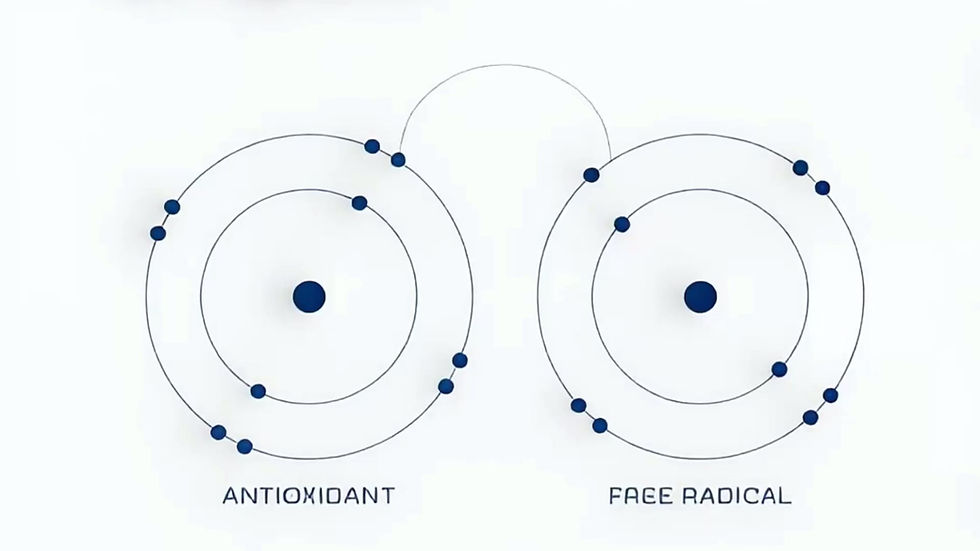
Selective antioxidant: targets only harmful free radicals (e.g., hydroxyl radical)
Reduces excess oxidative stress without disrupting healthy oxidation
Published works on
therapeutic hydration


The Therapeutic Hydration Framework™
It's time we expected more from the water we drink.
The Therapeutic Hydration Framework invites you to discover what makes hydration truly therapeutic and how it can become one of the simplest ways to support your long-term health.
The Breadth of the Research
From neurodegenerative diseases to metabolic disorders and cancer, molecular hydrogen has now been studied across more than 200 human and animal disease models.





Since 2013, hydrogen rich water has been
leading the health movement in the US
“The water (Kangen) is a hit among Hollywood A-listers who attribute their renewed vigour to it.” Harper's Bazaar / March 2013

“Water, Water Everywhere” by Inge Theron identifies water as “the number-one natural weapon in your age-defying beauty bank.”
“..after six weeks of Kangen water, skin glows, nails are longer, teeth appear healthier, hair is lustrous, lips are hydrated, eyes are brighter, and sugar cravings abate...Bill Gates has installed 16 Kangen SD-501 machines in his 25-bedroom house.” New You / July 2013

Giancarlo Giammetti - the former Valentino chairman shares the ten things he can’t live without.
“1. Kangen water machine - I have much more energy when I drink the water. You have to get it.” GQ / November 2013

Let's talk


